Types of Driveway Gravel and When to Use Them
Compare crushed stone, dense-graded aggregate, clear stone and pea gravel before estimating a driveway order.
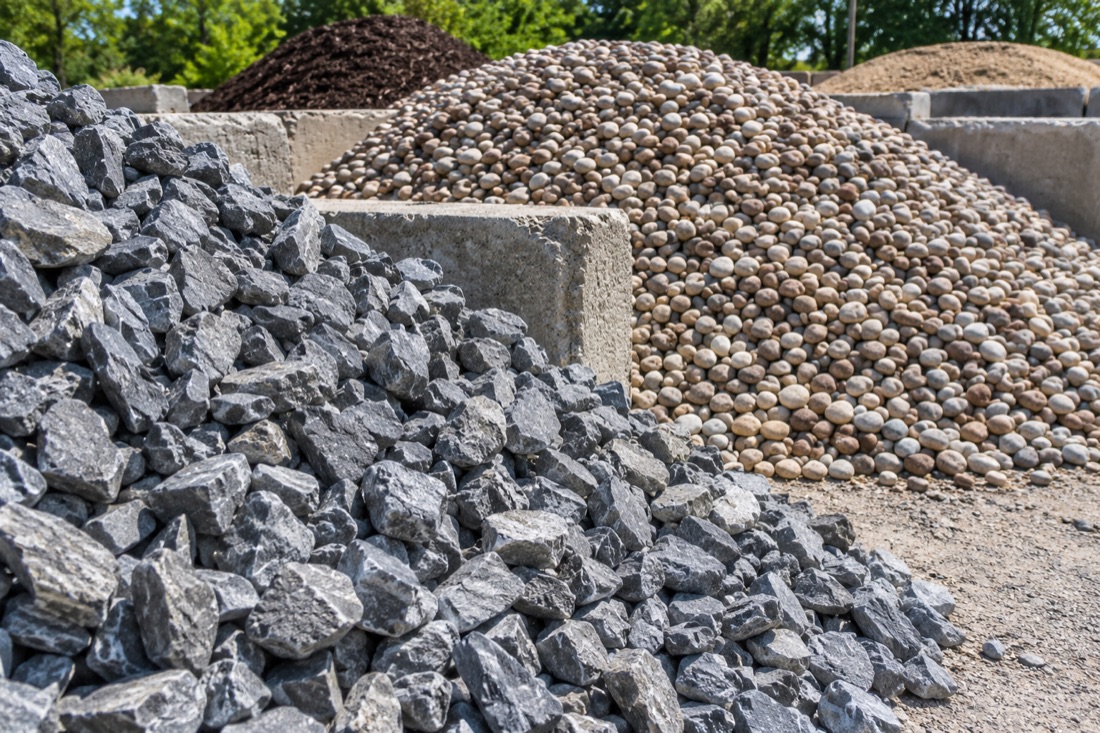
Identify the layer first
Ask your supplier or installer which material the driveway design calls for. A load for a compacted base serves a different purpose from a decorative layer or an aggregate designed to drain. Product names vary across quarries and regions.
| Material | What to ask about |
|---|---|
| Dense-graded crushed aggregate | A blend of coarse particles and fines that can compact. Ask whether the grade matches the specified base or surface. |
| Clear or washed crushed stone | Angular material with limited fines. Ask whether it is suitable for a drainage layer and how it will be confined. |
| Pea gravel | Small rounded stones that can shift under turning tires. Check suitability for the intended traffic and whether the design provides containment. |
| Surface gravel blend | Ask for the local product intended for an unpaved traffic surface. Confirm grading, fines and maintenance with the supplier. |
Two layers can mean two separate orders
For an illustrative 500 ft² area with a specified 4 in base and 2 in surface, the placed volumes are 6.17 yd³ and 3.09 yd³. Apply each product’s supplier-recommended adjustment and density separately, and price both deliveries. The example shows the arithmetic. Use the depths specified for your project.
Questions to ask at the yard
- What is the exact grade, and is it recommended for the layer and vehicle traffic?
- How much material is delivered for each cubic yard placed?
- What bulk density should I use, and is the price per short ton, tonne or yard?
Read FHWA’s gravel roads construction and maintenance guide for the distinction between surface gravel and base aggregate. Continue with our gravel pricing guide for a worked quote comparison.